Please visit the new site for Flatbush Gardener at https://www.flatbushgardener.com/.
All updates and additions will be done only on the new site. This site remains, for now, as an archive.

Please visit the NEW SITE for Flatbush Gardener
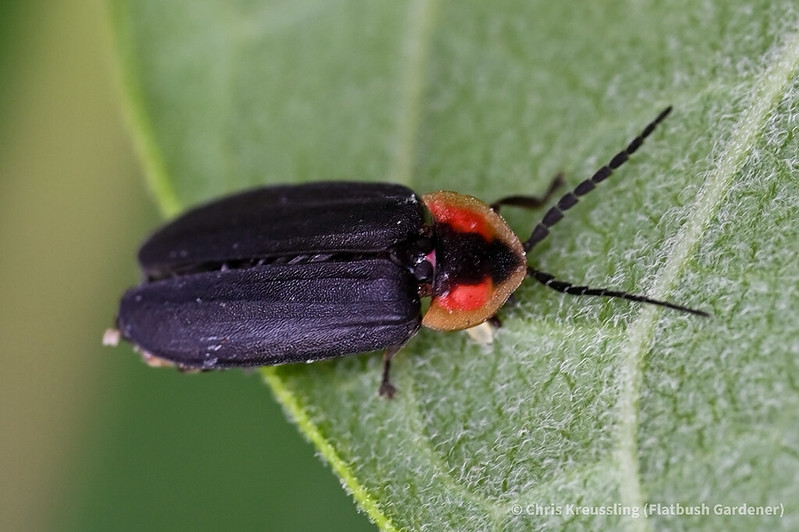
The Firefly Atlas is a collaborative effort to better understand and conserve the diversity of fireflies in North America. Launched in 2022, the project aims to advance our collective understanding of firefly species’ distributions, phenology, and habitat associations, as well as to identify threats to their populations.
Although the Atlas tracks all species described from the US and Canada, we are currently prioritizing efforts for a subset of 13 threatened and data deficient species found in three focal regions of the US: the Mid-Atlantic, Southeast, and Southwest. These priority regions were chosen based upon having a high number of threatened species and/or a high number of data deficient species. - What is the Firefly Atlas?
Originally published as a Guest Rant on Garden Rant, November 4, 2009. Recovered from the Internet Archive. I replaced the photo snapshot with a link to the high-res photo on Flickr. I've replaced archive links with current, active links where possible. Those that have since link-rotted are noted.

Colony Collapse Disorder (CCD) has been making the news rounds for a few years now. It's old, if still current, news. Dire outcomes from the loss of honeybees have been proffered. For example, PBS recently introduced an online "ask the expert" feature with this:
Since the winter of 2006, millions of bees have vanished, leaving behind empty hives and a damaged ecosystem. [1]
Really? The ECOSYSTEM?! Did they not notice that honeybees aren't part of the ecosystem?
Honeybees are livestock. They are animals which we manage for our uses. We provide them with housing and maintenance. We even move them from field to field, just as we let cows into different pastures for grazing.
Perhaps, if CCD can neither be prevented nor cured, disaster would come to pass. However, the underlying cause would not be the loss of the honeybees but our dependence on them as a consequence of unsustainable agricultural practices.
The old ways of farming include hedgerows, uncultivated areas between fields. The biodiversity of these patches provide substantial habitat for native pollinators, as well as other beneficial insects. When even these rough “unproductive” patches of land are cleared, we set the stage for the patterns that have come to dominate agriculture: more herbicides, more pesticides, more machinery. All of these also damage the soil food webs that support both soil fertility and agricultural ecosystems. Although manufactured inputs provide temporary relief, they reduce the ecological functions of the land, requiring more and greater inputs to achieve the same effect. This is the definition of addiction, and it’s a clear sign that this way of doing business is unsustainable.
Why do we need to ship and truck pollinators around? There are plenty of native pollinators to do the job, where we haven't decimated their habitats. There are 4,000 species of bees alone in North America. 226 species are known in New York City. Many of them visit my gardens in Flatbush, Brooklyn; some have even taken up residence [2]. Many native bees are ground-dwellers which need only some open ground in which to dig their nests. When every patch of ground is cultivated, plowed under or paved over, native pollinators disappear. Suddenly, we “need” honeybees for pollination.
I care about the honeybees. I like my honey and beeswax candles. I support efforts to legalize beekeeping in New York City. But not at the expense of the biodiversity that is all around us, even in the city, if only we care enough to look for it, value it, and nurture it.
End of original guest rant.
Maybe I am more like Demeter, weeping for the hold darkness has over others, while reaching and hoping for a time when we can bring everyone back into the light.
- Standing Still 2021: Demeter Waiting

As in past years, I'm limiting this list to northern North America for two reasons:
In 2020, this paper:
Vascular plant extinction in the continental United States and Canada
caused me to expand my list from 6 to 59 species, including 7 extinct in the wild. The summary is terse, and grim:
Sunday, May 22nd 6th, I will be hosting and facilitating a workshop on gardening for habitat with native plants in my home garden.
The workshop is from 12noon to 2pm.
Space is limited, so please register at the Eventbrite link below.
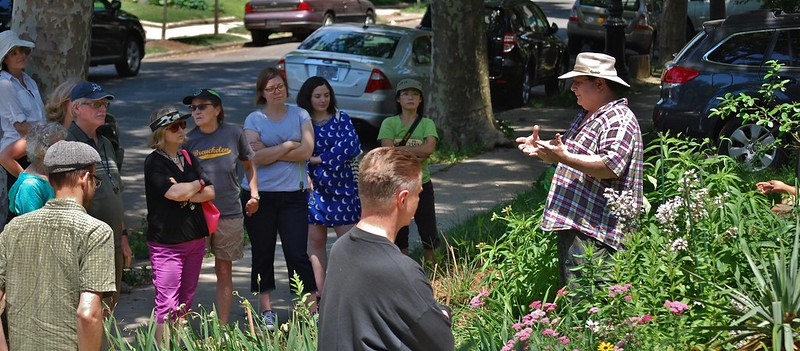
Learn how to garden with native plants to create wildlife habitat, even in small urban gardens. In this interactive garden tour and workshop, Chris will use his garden to highlight the importance of native plants for sustaining urban wildlife, and how to create and maintain a garden for its ecological value. With nearly 200 NYC-native plant species, and over 400 documented insect visitors, you are sure to learn something new and find inspiration for improving habitat wherever you garden.
Presented by Chris Kreussling. Chris is an urban naturalist and advocate for urban habitat gardening with native plants. He has led numerous native plant and pollinator walks and workshops, for NYC Wildflower Week, Wave Hill, the High Line, and others. His garden is a registered habitat with the National Wildlife Federation, Xerces Pollinator Society, and other organizations. He’s documented this ongoing transformation on his gardening blog, Flatbush Gardener and on Twitter as @xrisfg.
- Eventbrite
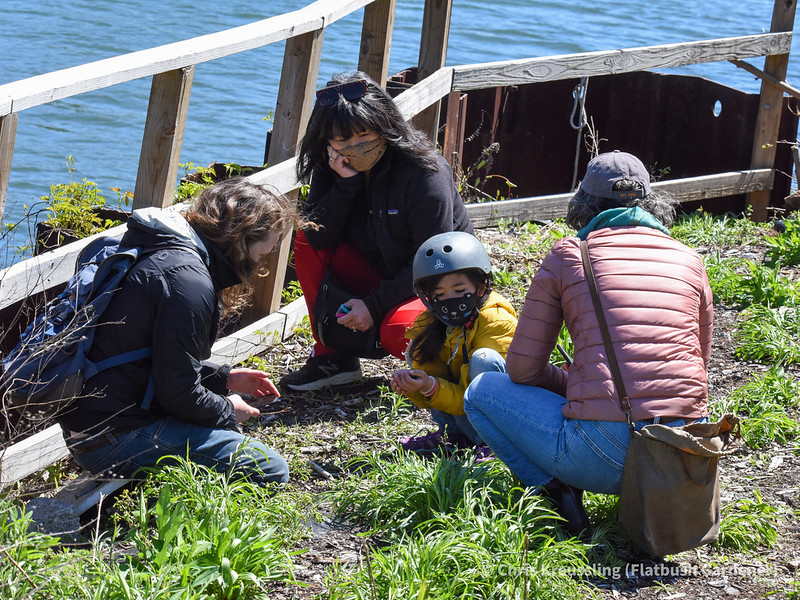
The annual City Nature Challenge (CNC) is this weekend, from Friday April 29 through Monday May 2. I put together a presentation on Slideshare with a brief overview of New York City's participation in CNC.
I'm one of the Brooklyn Borough Captains for the NYC Battle of the Boroughs, a friendly inter-borough competition among the boroughs to promote CNC participation across NYC. Following is a list of all the planned events and participating greenspaces in Brooklyn. You can also find this list on the Brooklyn CNC 2022 iNaturalist Project Journal.

